Showing posts with label computer games. Show all posts

Monday, 21 November 2016

Judgement - A Text Adventure

A course I am doing wants me to create a small text adventure and to share it on the web. So, here it is: Judgement.

Any old gamers (or younger gamers with an interest in gaming history) may recognise a couple of references in here - hopefully worth a small smile.

If you are of a really nervous disposition you might want to be a little wary of this. Although as a text adventure - ie mostly words - any hazard is more in your head than on the screen (as if that were any better!).

Please give it a go and let me know how you get on. I'm fairly sure all the typos are gone, but if I'm wrong please let me know that too.

EDIT: The links to the game should work now - apologies to anyone who tried them before. One tip: if you click on the Full-Screen button the game looks far more effective, I think.

Saturday, 21 May 2016

Archiving The Internet

This post is mostly a shout-out to Dark0ne over on Nexus for some rescue work he is doing, but underlying that is a serious concern about social history.

As regular readers will be aware I am currently working through sermon notes, amongst other things, for a preaching series taking a fresh look at St. Paul's New Testament letter to the Galatian churches. Our understanding of 1st-Century writings, especially the New Testament, has been transformed by discoveries over the past half-century or so of ancient documents showing what life was like in those times. The Dead Sea Scrolls are a well-known example, of course, but there have been many more documents found, less well-known but still giving important insights.

Meanwhile archivists are struggling to read records saved - 'permanently' - to various forms of tape and optical disk archive just a few decades ago.

An important part of late-twentieth and, especially, early twenty-first century social interraction on the Internet has been various forms of modding communities. Modding is where users of computer games create their own additional material: sometimes just fixes for problems that the original game creators considered too minor (or hard) to fix; sometimes minor changes to the appearance of in-game entities; occasionally even significant amounts of extra content, such as new areas or new quests. A lot of this modding was done (is still done, if it comes to that) for free, as a way of sharing enjoyment and as a way of gaining appreciation and reputation. Around these game changes grew discussion groups for commenting on them, seeking guidance about how to solve technical problems, and just general chit-chat.

From a social history point of view this sort of thing is invaluable as a record of how the Internet, including its various forms of 'social media', developed. But's it's also important material for economists and others as there is often no money involved, yet modders spend ludicrous amounts of time and effort creating their work, which they then share openly. I've shared a couple of short quest/story mods myself, for Dragon Age - the work involved for even small mods was stunning; I can't even begin to imagine what some of the largest mods would have taken. Inevitably there will be other reasons in future for wanting a record of such things that we can't even imagine at present.

So I consider it wonderful that Nexus, and Dark0ne in particular, are transferring mods, including their attached information, from the once-massive but now closed modding site FileFront across to the Nexus network itself.
"Back in the middle of 2015, FileFront.com quietly shut the doors to its various gaming hub sites (which were much like Nexus sites for game mods back in their hayday in the early to mid 2000s). Over the past few years File Front was extremely out-dated, slow or outright broken in many areas, lacking some TLC that it needed despite still having an active contingent of core users who still frequented their forums. ... 
As a result, we’ve been working to save as many files from the File Front sites as possible and finding the best method to port them into our Nexus system. As File Front sites were largely like Nexus sites are now in terms of structure, we felt that focusing on the File Front files side of things would be in everyone’s best interest. The focus wasn’t just on not losing the files, but on saving the category structure, screenshots, file descriptions and author information that is actually what made the original File Front sites usable and easier to navigate for the games they supported. ... 
We don’t expect these sites to be popular or demanding on our servers, but I couldn’t sit and idly watch tens of thousands of mods for games I grew up with be lost to the internet forever."
Nice one, Dark0ne!

Sunday, 8 March 2015

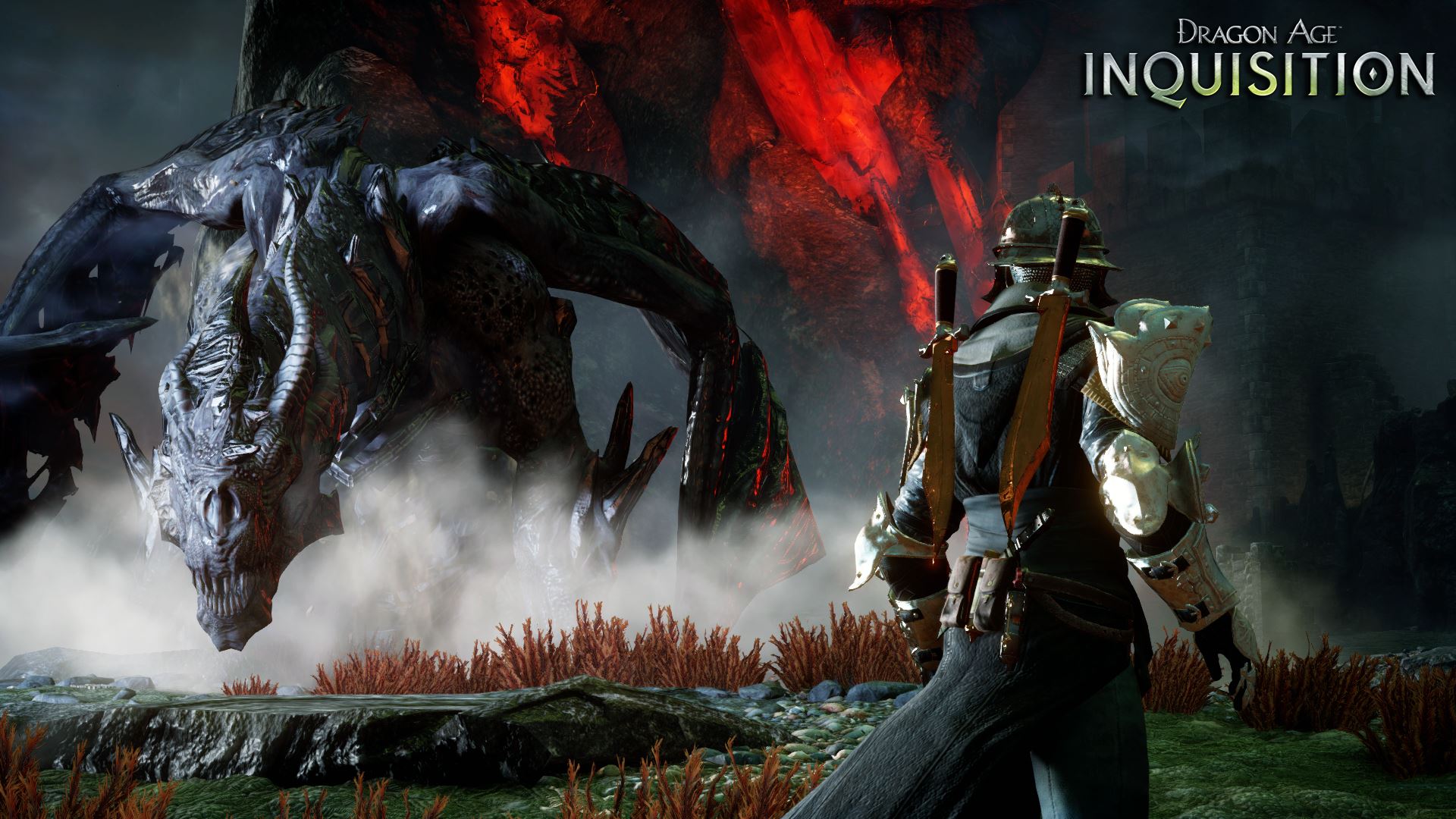
Dragon Age Inquisition Review

A couple of months ago I posted an initial impression of the computer role-playing game Dragon Age: Inquisition. I have since given the game quite a thorough going over, so here is my full review:-

Summary - 8/10


There is a decent game in here, with the usual Bioware strength in storytelling and characters, buried under a morass of dull side-quests and brain-dead combat.

Graphics – 7/10


These are highly detailed and look good on screenshots. Visual ‘realism’ doesn’t hang together as well when playing the game, and oddities and inconsistencies stand out against the more detailed and ‘realistic’ basic graphics.

There are a number of different areas in the DAI world, each with their own area style, which gives a good sense of environmental variety. Unfortunately blurring and mistiness spoil what should be the more dramatic vistas.

Facial detail is erratic: they seem to have gone to a lot of trouble with irises, yet the whites of the eyes often turn strangely pink/red during conversations and cutscenes. Hair quality is generally poor – on medium graphics quality it is very poor – and facial hair is worse.

Many character animations are poor. Female characters tend to stoop during conversations, Cassandra in particular looks as if she suffers from permanent stomach cramps. Meanwhile a female human Inquisitor stands with arms held away from her body like a penguin, whilst Cullen minces across the room to the War Table. These are all animations we see a lot.

There is a lot of clipping goes on: hair clipping ears, Solas’ thumbs clip his clothes in conversation, arms sometimes clip bodies, and so on. This is disappointing in a modern high-budget game.

Sound & Music – 9/10


Sound effects are clear but hardly noticeable, which suggests they are done well. Basically things make the noises you expect them to.

Generally speaking, background music and ambient sounds are present but fairly minimal: they are there at the usual places but you don’t really notice them much.

The main character is voiced, with only two choices of voice for a given character type (British accent or US accent, for me). The main NPC characters are well voiced, with many old characters making a welcome return from earlier episodes. Minor characters are generally well-voiced too, although the dodgy French accent of those from Orlais becomes wearing after a while.

There is a really excellent musical interlude at (what I assume to be) the ending of the first chapter. It creates a genuinely moving and memorable moment. There are other moments where the music becomes more intense as the action or the drama does, with great effect.

There is a singer in the main tavern, singing a variety of songs (a far better variety of far better songs than Skyrim, say). I know the songs are good because I downloaded several of them separately. Unfortunately, in-game the sound in the taverns is poor, so you can’t really appreciate them (sadly unlike Skyrim where the tavern songs are positively obtrusive).

Ambient speech (the random comments made by people as you pass) varies from good to excellent. It frequently reflects actions you have taken: for example in the case of an early quest you get small family groups whose comments originally reflect adults claiming not to be hungry to encourage children to eat what little there is, which changes to comments about there being plenty for everyone “thanks to the inquisition”.

World Areas – 8/10


Dragon Age Inquisition is NOT open world, in spite of rumours to the contrary. It is the standard arrangement for such games of an overview map (accessible from a War Table or from the World Map) allowing movement between discreet game areas. Annoyingly, sometimes you need to use the War Table to get to an area, sometimes you have to use the World Map, and sometimes you can use either.

These game areas are big, far larger than anything in earlier Dragon Age episodes. As mentioned earlier they have a good variety of visual and auditory styles.

Extensive use is made of the environment to channel where the player can and cannot go, often extremely irritatingly. Extensive ranges of ten-foot high cliffs, which the game mechanics prevent you from going up, are as frustrating as they are geologically implausible.

Some of the environments have a range of difficulty levels within the same area; presumably the idea is that you have a reason to come back later. In the Hinterlands, for example, which is the first area you get to explore, there is a tunnel leading to an area where you can see a dragon in the distance. This dragon flies around for a bit then toasts your party if you hang around. That makes sense to me.

What doesn’t make sense in the same area is that different fade rifts – ‘tears’ through which demons come, which you are able to close once the demons are defeated – have very different difficulty levels, yet (as far as I can see) no visible difference between easy and hard. So the only warning you get that a particular rift is too hard for your party level is the ease with which the demons wipe you out.

Combat – 6/10


The basic combat mechanic/strategy seems to be that you hold down the fire button and press special move buttons as they become active. Attacks auto-target – sometimes to the target you are clicking over, sometimes not – and many special moves automatically jump to the selected target. It really is that mindless.

If you want to move yourself (eg to get a rogue behind an enemy ready for a backstab) and you haven’t got a special move to do it for you, then combat is very cumbersome, at least in normal mode. Similarly if you want to choose your own target(s). You can do it, using a combination of pausing and right-clicking, but the game works against you.

If you want to have your characters working together tactically, the game really works against you. NPCs retarget really quickly, and if you pause then swap characters it promptly unpauses and carries on combat.

There is a tactical combat mode which is supposed to help those who want a more thoughtful approach to combat. Unfortunately it is completely broken. It is meant to give you a top-down view of the battlefield on which you can issue orders to all your characters. The trouble is that, even in the open air, the camera is far too low, so you cannot see most of the battlefield. In principle you can move the camera around, but this is clunky on the flat, and the camera gets blocked or trapped by changes in elevation. In tunnels or enclosed spaces you cannot see anything useful at all.

Skill trees and AI options are dumbed down; even something is simple as issuing a command for all characters to 'hold' is ineffective as often as not.

Main Quest & Story – 9/10


The main storyline has parallels with that of Dragon Age Origins: the world is threatened with destruction, but before you save it you have to deal with loads of people who reckon this is a good time to focus on killing one another.

The story gameplay is mostly linear; the main option is whether you seek support from the mages or from the templars. Each has its own separate quest/area to gain that side’s support; the others form the main opponents in a later major battle.

It’s a well-balanced story, I think, with suitably major battles along the way and a satisfyingly epic ending. I like the use of an epilogue to highlight the consequences of some of the decisions you make along the way; although by and large I wasn’t that invested in most of those decisions or consequences.

The big problem with the main storyline is that it is spaced out by a need to gain ‘power’ in order to progress, and to level up your characters so they are strong enough for the next story area. You do this by going out into the various different areas on the War Table and World Map, and performing various tasks there: some meaningful and engaging, many not. Eventually you become ready to take on the next challenge and can re-engage with the story again. Since the storyline quests are flagged up as being terribly urgent when you first hear about them, these delays are quite immersion-breaking.

There appears to be a major storyline cop-out concerning Morrigan and her son (spoiler warning here, kind-of). At the end of Dragon Age Origins her pregnancy is left as a major hanging plotline, apparently heralding great mysteries to come. If you start with DAI’s default backstory, she wasn’t even pregnant, so there is no son. If you set up your own backstory then you can make it so that she does have a son, but it all seems to be a damp squib. Things are left open as to possible consequences in later episodes, but in DAI this non-event is a real disappointment.

Side Quests – 7/10


Each area has its own fairly major quest, and some have quests directly relating to the story quest and/or quests relating to one of the followers. These quests are often quite engaging. There are also various activities aimed at building up power, typically by closing fade rifts and claiming key points for the Inquisition.

In addition the main areas are all smothered in trivial quests. Some of these are the traditional ‘fetch’ quests: go from A to B to collect something, or talk to someone, then go back to A, possibly via C. Standard filler for cRPGs when the writers run out of ideas.

But the worst are the ‘collect’ quests. There are multi-area quests which want you to collect a hundred and odd ‘shards’ to unlock a series of doors, or sixty mosaic pieces, making up five mosaics, and so on. Probably the most annoying of these is a bottle collection quest which insists on triggering a ‘hidden object nearby’ indicator which is normally used for things which are important, so you can’t even just ignore that one. There is also a stack of such quests within each area: collect various minerals or herbs; collect locks to build prisons; collect intestines of creatures killed by dragons; and so on.

Follower quests are obtained by talking to the follower/advisor characters; presumably only if they don’t dislike you. The early quests often seem a bit trivial but as you go through the quest series it can become more engaging and even moving. Romanceable characters have additional quests to advance the romance.

Replayability – 7/10


There are basically two main routes through the storyline, and a player would typically only do a proportion of the character quests in one run-through, along with a single romance quest (out of eight). If the combat worked properly there would also be a number of different class and race options.

In practice, I have played through it once when I explored the available areas and got the hang of how to play the game reasonably efficiently and without too much frustration. I then went through a second time in hard mode choosing the alternate options and a very different romance (Sera rather than Cassandra). I started a third run-through to try a few different things but got bored part way through. The trouble is that whilst there is a lot of content in the game, too much of it is basically dull and/or repetitive.

The greatest problem for long term replayability is the lack of any modding tools. The game cries out for interesting quests to fill out the vast areas full of nothing much interesting, and the combat needs a total makeover. Not to mention more cosmetic mods such as decent hair, and a greater variety of customisation options.

Conclusion


Dragon Age Inquisition is an initially good-looking game, which ultimately disappoints. Whilst it is far better than Dragon Age II, it has none of the originality and replayability which made Dragon Age: Origins great.

Thursday, 1 January 2015

Dragon Age Inquisition - Early Impressions

Dragon Age Inquisition (DAI) is the third instalment in the computer RPG Dragon Age series. Dragon Age: Origins, the first, was a brilliant game, Dragon Age II was pretty horrible - bad enough to seriously dent developer Bioware's previously excellent reputation - what about Inquisition?

My first impression of DAI was poor, but as I have played on it has got better and better.

A bit of history before I attempt to articulate why. Inquisition has its roots in two venerable approaches to computer RPG games, both of which have deep literary roots.

The first approach is the mixed party of adventurers on a quest, typically to save the world, dealing with various side-quests along the way. Think Lord of the Rings. The party typically contains a tough fighter/knight sort of person, a sneaky rogue who can open locks and attack people from behind, a wimpy intellectual magic user, and a religious healer who often also doubles as a second fighter. This mix goes back to the days of Dungeons and Dragons, a tabletop game played over many a weekend by people (including myself) back in the seventies and eighties. The great thing about this approach, particular with the 'group of friends around a table' background, is that interactions between party members became an important part of the tradition. Also the D&D background insists on an openness in gameplay - allowing many different playing styles and approaches to solving the problems encountered along the way. This provides a lot of replayability for this type of game, as you can play in several different ways, and make different decisions en-route which might significantly change the way the story unfolds.

Bioware developed the classic games in this tradition: Baldur's Gate and Neverwinter Nights. They moved on to other things and Neverwinter Nights II was developed by Obsidian, taking the gaming perspective from the old isometric top-down viewpoint to a more immersive 'over the shoulder' camera. I thought this was a great game and storyline, but badly marred by the game engine, which couldn't cope with the challenges of the new approach. Then there was a gap before Bioware returned to the genre with Dragon Age: Origins, which solved the camera problems (near enough) and provided a huge amount of replayability by having half-a-dozen different starting points - depending on your choice of main character - and by providing feedback at the end about the consequences of choices made along the way. To add the icing on the cake they also provided a modding tool - allowing people to create addons and extras to go with the game. The effect of this is to extend the lifetime significantly, as graphics can be improved and extra stories and quest series added in.

The second approach is the lone hero, an all-rounder who learns the skills s/he needs along the way. The greatest exponents of this approach to cRPGs are The Elder Scrolls series by Bethesda, whose most recent example is Skyrim. This approach forgoes character interactions, replacing them with a richer, more diverse set of questlines, and a more immersive approach to fighting. As well as the main 'saving the world' quest, the game world is more of a 'sandbox' filled with quests large and small. In a Bethesda game you can replay ignoring the main quest more or less entirely, instead focussing on becoming head of the mages guild, for example, or helping one side win the civil war which is the background to the gameworld, and so on. The more D&D-derived games retain a bit of a turn-at-a-time approach to combat, where you fight by clicking on a target and letting the game engine decide if and when you hit it. Skyrim and its predecessors work more on the basis that you swing a weapon and whatever it hits takes damage; a problem if you are not very accurate and hit a town guard, say. Bethesda's games always have a wow-factor in the graphics of their environments; being also moddable means that this can be kept up to date as time, and graphics technology, moves on.

One of Bioware's stated intentions with Dragon Age Inquisition was to add a more Skyrim-like vibe to the game, compared to previous games in the series, with a more open-world and immersive feel. I had been playing Skyrim a lot over the weeks before I got DAI and would say they failed. Indeed I felt their attempts just made the initial impression of the game seem cumbersome and rather naff.

For example the environmental graphics (hills and grass and sky and suchlike) are really quite good compared to earlier games in the series, but rather meh compared to Skyrim. Plus the way all the hills and trees and suchlike are laid out tends to get in the way of travelling - such practicalities seem less well thought out than in Skyrim. The game interface seems to be aimed primarily at console controllers, so using a PC with mouse and keyboard is that little bit less intuitive and convenient.

Fighting is better than Dragon Age II - where it was awful - but is still a clicky mess. If you try to fight in real-time, rather than overtly turn-by-turn, then the game seems to choose for you who you are attacking from nearby enemies, irrespective of which enemy you are actually trying to target, and you just click away - occasionally interrupted because the mouse pointer happens to be over some other control, like the inventory button - until the enemy is defeated. Little control and no real tactics. You can pause the game (although the pause button is inconveniently placed) to give commands to other party members, but they just seem to do what they are told for a few seconds then revert to their AI which, as a default, just attacks the same enemy as the main character. Party tactics - one of the strengths of the adventurer party approach - fly out of the window. There seem to be ways around this but the default approach is pretty much brain-dead.

One alternative is to use an old-style isometric top-down view, which seems to be more controllable. Unfortunately this doesn't give a good view of large monsters, nor of the rifts floating in mid-air. I hope there are ways around this with practice.

The game world is divided into something like a dozen different areas (thus far). Each area has a stack of individual quests which give you 'power' and 'influence' when you complete them. Said 'power' and 'influence' then go toward progressing the main story quest. The area quests are mostly of the 'go to location X, kill the enemies there, and collect Y' format. There are a few linked quest-lines which start to emerge as the game goes on, but in the early parts of DAI the rich storylines of  Dragon Age: Origins or Skyrim are notable by their absence.

The overarching story quest is controlled from a central area where you can talk to your companions (so far companion interactions are a lot less interesting than is usual in such games, but that seems to be slowly improving as the game goes on), send agents off to carry out investigations, which typically open up new quest lines and/or new areas, or travel yourself to one of the game areas. This is the part of the game which is relatively novel (at least within this genre) and which is growing on me.

In fact the game is a whole is steadily growing on me. As I get further on the characters and story are finally beginning to develop, and I am finding ways around the various issues and inconveniences. The graphics and music are not memorable but they're not aggravating either, and the game does have that imponderable "I'll just do this one next section before I stop" degree of addictiveness. If this continues DAI could prove to definitely be a good game overall, but given its many flaws I can't see myself ever considering it a great game.

Tuesday, 15 March 2011

Dragon Age II - Initial Impressions

Last year I enthused (twice) about Dragon Age: Origins, the computer fantasy role-playing game. In particular I enjoyed the story-telling and role-playing aspects: the game drew me in - much as a really good book does - and engaged me deeply. Late last year/early this year I've been trying to use the associated tools to do my own story-telling, through creating short mods. It's very difficult, but fascinating.

Last weekend Dragon Age II came out. Finally we would find out: a) if Bioware could repeat (or even improve upon) the excellent FRPG experience of DA:O; and b) what happens next. The first episode ends on a mystery: you've saved the world from the evil archdemon, but the witch Morrigan leaves carrying a kind of demon-spawn/dragon-spawn child. One of the add-on packs suggests that she somehow intends this for good, to oppose her mother Flemeth's evil plans, but we won't know until Bioware continue the story.

Having spent several hours playing the early sections of DAII (and having a daughter who has completed it all), I can tell you: a) no, it's not even close; and b) we still don't know, as DAII doesn't include Morrigan or her child.

DAII moves to a new character and a new area, which I think is good: from a Grey Warden roaming the countryside, and a small provincial town, in order to defeat an archdemon and save the world; to a refugee striving to make a new life in the big city. Settings are much bigger and more detailed, with a far wider pallette of scenery, rooms, walls, furniture, etc to play with. This is good at first, except that Bioware seem to use this new scenery repetitively. Because it is more distinctive and more detailed it is also more obvious when you come across the same complicated rock formation, or layout of wooden platforms, or strange tunnel shapes again and again and again. It's a good idea but badly applied.

The new game has new, much more interesting, animations for fighting, walking, etc. Some of the fighting ones are very impressive - such as the staff fighting, or the rogue somersaulting into attack - some of the walking and standing ones are less so - such as the main character's sister whose animations appear to be based on a streetwalker. Again, though, these good things have been applied badly. At the same time as making the fighting animations longer and more complex, they have also made them take less time. So the staff fighting moves completely lack any sense of weight or momentum, and the somersaults just make movement fiddly and unclear. Combat visuals that could and should have been awesome become simply awkward.

The quest structure, at least in the early phases of DAII, is similarly fiddly and uninvolving. In DA:O you basically had one big quest, broken down into six sub-quests, plus an assortment of small side-quests. Side quests associated with your companions might have a certain amount of depth, whilst the others were essentially trivial go-fights. In DAII, at the beginning you just follow the path fighting darkspawn every now and again. Then you get taken to the city of Kirkwall and you have to make a choice of who to work for for a year: mercenaries or thieves/smugglers. This seems like it should be an important choice but then the story skips that year and you are out on your own. There are a few small quests come from your old employers, but it doesn't really seem to make a difference. In part that is because the quests themselves don't seem to matter that much. There are basically three types of quest: those where you find some random object and take it back to its owner (whose location you magically know immediately); those where you fight your way through assorted opponents to a location; and those where you go to a location and several waves of nasties attack you. There are lots of these quests, none of them seeming of any particular importance except as a way to get money, in a quest mechanism which groups them by location rather then theme, making it all seem very artificial. I gather that the quests get better as you go further into the game, though.

Companions and their dialogue were a constant source of interest in DA:O; in DAII it is purely functional. They basically only talk to you if they want you to do something; even then they will only talk in specific places. Otherwise you just get a stock response floating above their head. When you do have conversations then your side of the conversation is dumbed down to (generally) a nice response, a flippant response and an aggressive response. These are carefully indicated by symbols and a two or three word summary, but they don't even tell you what your character will say if you click on one. Your character's lines are actually voiced in DAII, which they weren't in DA:O, but that is less of a benefit than it might be as I find the voice used rather irritating.

In summary then: my initial impression of Dragon Age II is that it looks fairly pretty (although less so than, say, 2006's Oblivion) but it fails to engage me. Whereas Dragon Age: Origins was really good at drawing me in and involving me in the characters and the story, Dragon Age II is more about pushing me away to follow as a disengaged observer. Some people consider character statistics and complex skill trees and the like key to CRPGs; I consider the role-playing aspect (which is the 'RP' in 'CRPG') most important: being drawn into the game through engaging character relations and an involving story, and being immersed in the game environment. DAII, at least in its early stages, specialises in de-immersing.

It's not a bad game, to be fair, just not a very good one: Bioware have simply cut too many corners and made too many compromises in Dragon Age II.

Note: 'FRPG' above abbreviates 'Fantasy Role Playing Game' - ie magic, swords, dragons, etc in a setting roughly based on medieval Northern Europe. 'CRPG' abbreviates 'Computer Role Playing Game'. So I guess you could say Dragon Age: Origins is a CFRPG, whilst Dragon Age II is a CFRPG ;-)